
HOW TO PLAY PADEL - RULES, SCORING & GAME SETUP
- Padel is one of the biggest trends in the world. People are drawn to it not just because it’s easy and fun to play, but because it’s social, accessible, and surprisingly addictive. With just a bit of practice, almost anyone can become a solid player. It’s also a great excuse to get out of the house, meet new people, and stay active.
I created this guide to explain the basics of padel so you can feel confident the next time you step onto the court. Whether you’re brand new to the sport or just curious how it works, we’ll walk you through the layout, scoring, equipment, and common beginner mistakes — all in simple, beginner-friendly language.
Basic Padel Rules (Beginner-Friendly)
Padel follows a lot of the same structure as tennis, but with a few unique twists — especially when it comes to the walls, serving, and movement. Here are the core rules every beginner should know:
1. Scoring
- Padel uses the same scoring as tennis: 15, 30, 40, deuce, whoever wins the next point after deuce takes the game.
- To win a match, you have to win 2 out of 3 sets. To win a set, you need to win 6 games — just like in tennis.
2. Serving
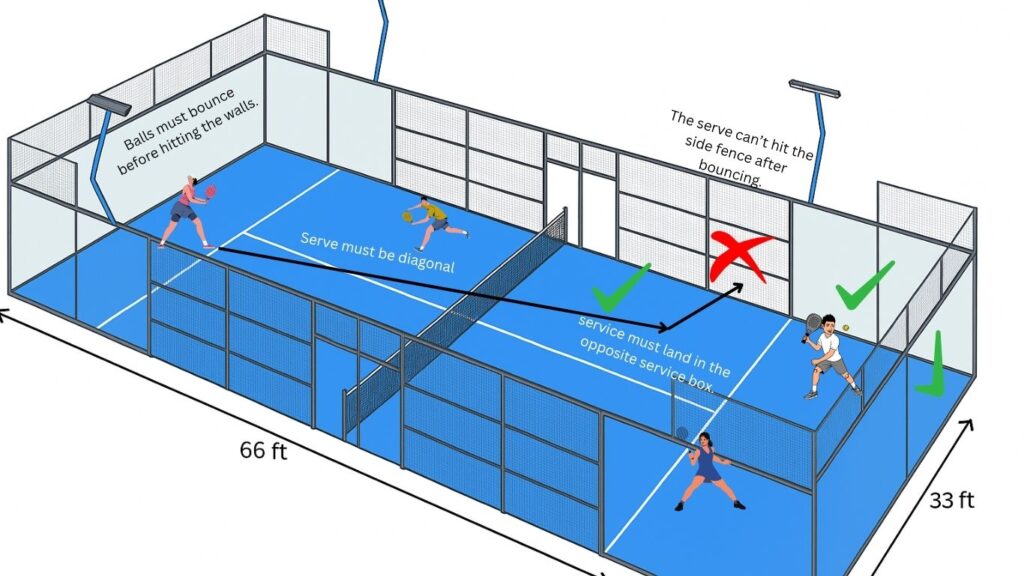
- You serve underhand, bouncing the ball behind your service line and hitting it diagonally into the opposite box.
- The serve must bounce in the box and can hit the glass after — but not the side fencing.
- You get two chances to make a legal serve, just like in tennis.
3. The Walls
- You can use the walls after the ball bounces — they’re part of the game!
- You can hit the ball off your own glass wall to return it.
- If the ball bounces and hits the wall, it’s still in play. If it hits the wall first, it’s out.
4. Ball In/Out Rules
- The ball must land within the lines — same as tennis.
- If it hits the fencing directly or leaves the court without bouncing, it’s out.
- If it bounces once and then hits the glass or wall — it’s still good.
Common Beginner Mistakes to Avoid
Starting out in padel is exciting, but there are a few common habits that can hold new players back. Here are the most frequent mistakes beginners make — and how to avoid them:
- Playing like it’s tennis: Padel is a different game! Don’t be afraid to use the walls — they’re part of the strategy.
- Standing too close to the net: New players often rush forward too early. Stay centered unless you’re actively attacking or defending at the net.
- Skipping proper footwork: Good padel players move with small, quick steps. Don’t rely on reaching — move your feet!
- Trying to hit winners too soon: Keep the rally going instead of going for flashy shots. Padel rewards control, not brute force.
- Not warming up: Padel is low impact but still physical. A few minutes of light movement and practice shots can prevent injuries.
- Ignoring communication with your partner: Padel is a team sport. Talk during points, call your shots, and encourage each other.
Frequently Asked Questions About Padel
Does padel use tiebreaks like tennis?
Yes! If a set reaches 6–6, a tiebreak is played to decide the winner. It’s usually played to 7 points (win by 2), just like in tennis. The winner of the tiebreak wins the set.
Is padel easier than tennis?
Most people find padel easier to pick up than tennis. The smaller court, solid racket, and walls help keep rallies going, which makes it more fun and less frustrating for beginners.
Can I play padel if I’ve never played a racket sport?
Absolutely. Padel is designed to be social and accessible. Many first-time players come from zero sports background and still enjoy it from the very first session.
What kind of shoes do I need to play padel?
Ideally, use padel or clay-court tennis shoes with good grip and lateral support. Running shoes are not recommended, as they don’t support quick side-to-side movement.
What’s the difference between padel and pickleball?
Padel is played with walls, uses tennis-style scoring, and has a different ball and court size. Pickleball is usually played on a flat court with no walls and uses a paddle and plastic ball. Both are fun, but padel is closer to tennis in gameplay.
Are volleys allowed in padel?
Yes! Volleys are a big part of padel. You’re allowed to hit the ball before it bounces, including at the net — just not when returning a serve. Good volleying is key to controlling points and attacking your opponents.
Explore More
If you found this guide helpful, here are a few more resources you might enjoy:
- 📌 Read our full 2025 Padel Racket Buying Guide
- 📍 Browse the 2025 Padel Court Directory
- 🤖 Try our Padel Racket Finder GPT
Thanks for reading — now go enjoy your first match!